
Repair Matched to the Failure
We do not treat every crack like a sealing job. If the base is failing, we recommend patching and rebuilding so the repair addresses the cause, not the symptom.
Serving Los Angeles, California & surrounding areas
Mon–Fri 8am–6pm Sat 9am–2pm
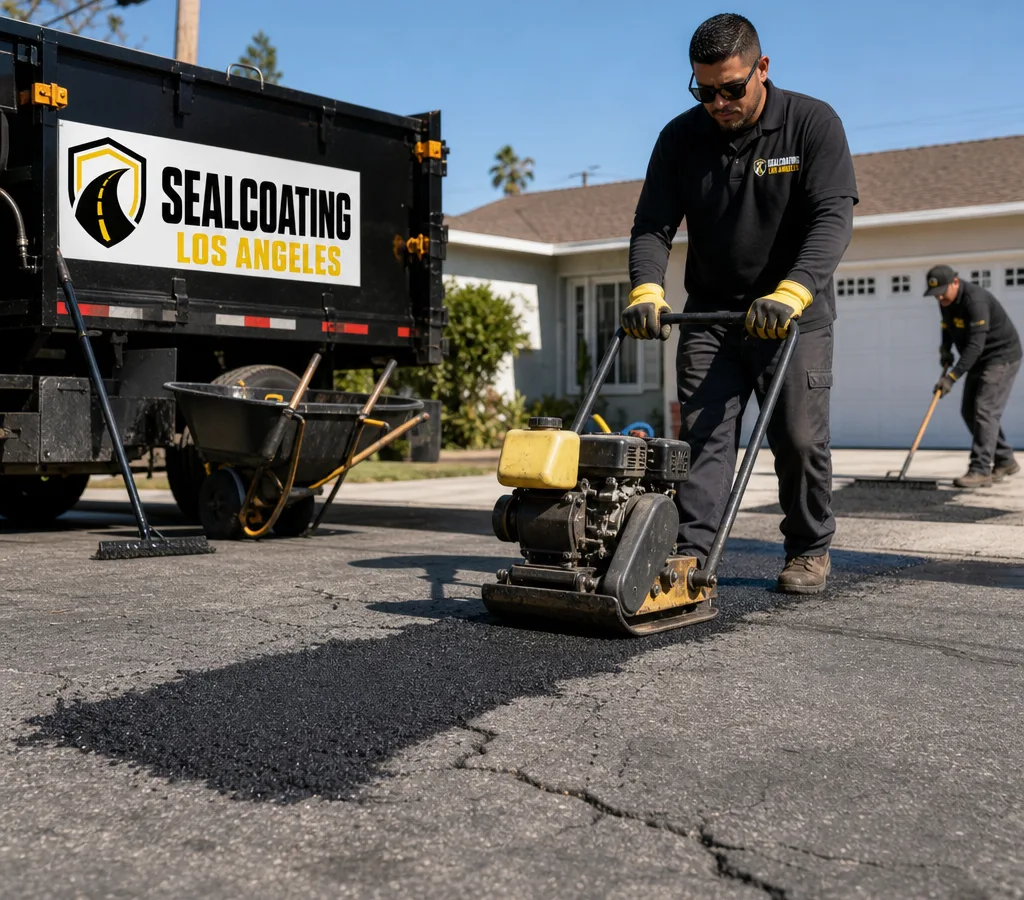
Fix cracks, potholes, and failing edges before they spread. We inspect the surface, recommend the right asphalt repair, and restore a smooth, drainable driveway that holds up to daily traffic.
If you are searching for driveway repair Los Angeles homeowners rely on, you are probably seeing the early warning signs: cracking that keeps reopening, low spots that hold water, raveling where the blacktop looks rough and loose, or a pothole that showed up after a storm. Asphalt fails in predictable ways, and the best time to repair it is before water gets into the base and turns a surface issue into a structural one.
Sealcoating Los Angeles handles asphalt repair Los Angeles property owners need when the surface is worn but still worth saving. That includes asphalt patching, pothole repair, and targeted pavement maintenance that extends the life of existing pavement. The goal is straightforward: remove what is failing, rebuild the damaged area correctly, and leave you with a driveway that looks clean and drives smoothly.
Because this is Los Angeles, the details matter. Heat and sun age binder and dry out the surface. Sudden rain can push water into cracks fast, especially where the driveway meets the street or where slopes direct runoff. In dense neighborhoods with tight access, repair methods and staging can make or break the job. We plan around those realities so the repair actually lasts.
Book Your Free InspectionDriveway repair is rarely one single issue. Most asphalt driveways fail in a handful of common patterns, and each one calls for a specific fix.
Once patches have cured and the surface is ready, asphalt sealing in Los Angeles can become part of an ongoing pavement maintenance plan.
Book Your Free Inspection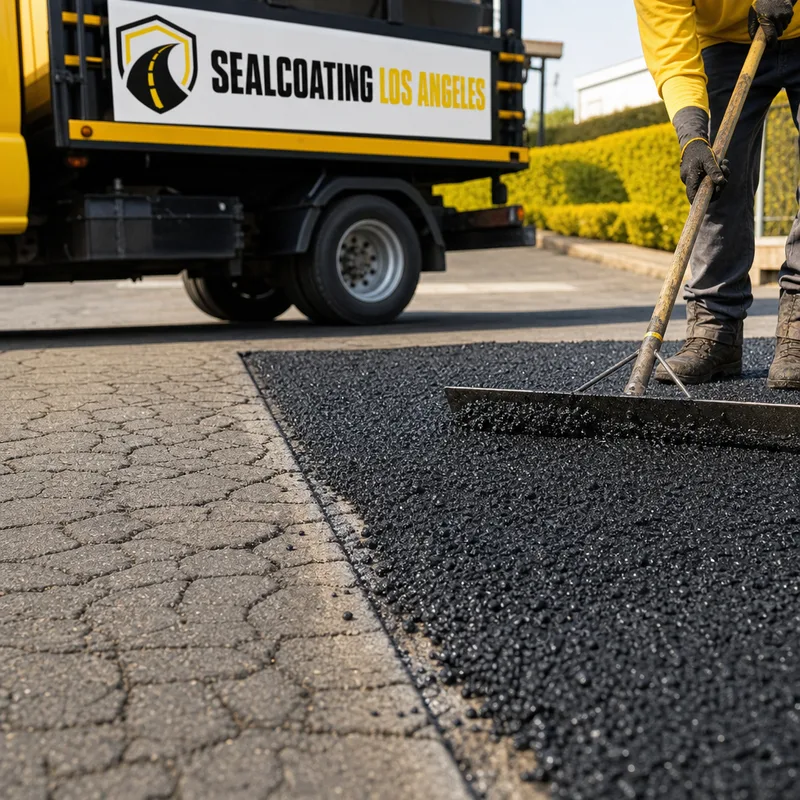
We do not treat every crack like a sealing job. If the base is failing, we recommend patching and rebuilding so the repair addresses the cause, not the symptom.
Square saw-cuts, proper tack coat at edges, correct lift thickness, and solid compaction are what keep patches from unraveling or settling.
Low spots, gutter lines, and driveway slopes are part of the diagnosis. A smooth surface is not enough if water still ponds in the same place.
From narrow Westside driveways to dense apartment entries near Downtown, staging and truck access affect the method and schedule. We plan for it up front.
You get a written scope that spells out cut areas, patch thickness, transitions, and curing expectations so you can compare apples to apples.
The repair method is based on the condition beneath the visible damage—not just what appears at the surface.
We look at cracking patterns, soft spots, drainage, and transitions at the garage, sidewalk, and street. If heavy vehicles use the driveway, that load changes the patch design.
You get recommendations for the right repair type: crack repair, remove-and-replace patching, skin patching where appropriate, or rebuilding sections that have base failure.
Failed asphalt is cut out cleanly. The base is checked for moisture and stability, then compacted or rebuilt as needed before any new asphalt goes down.
Hot mix is placed in lifts, raked to grade, and compacted. We pay attention to tie-ins and edges so the repaired area blends and supports turning tires.
We walk you through when it is safe to park, how long to wait before sealing, and what to watch for so small issues do not become repeat repairs.
Driveway repair in Los Angeles typically ranges from about $350 to $1,500 for small patching and crack repair, while multiple potholes, edge rebuilds, or larger remove-and-replace sections often run $1,500 to $6,000+. Pricing depends on the total square footage being cut out, asphalt thickness, whether the base needs rebuilding, access for equipment and trucks, and whether drainage corrections are part of the scope. The exact cost is confirmed after an on-site inspection so the repair can be sized to the real condition of the pavement.
Book Your Free InspectionLos Angeles driveways vary a lot from block to block, and that affects how we plan paving Los Angeles property owners can live with during the repair.
In Downtown and Koreatown, many properties have tight alleys or limited staging near garages and small parking areas. That often pushes us toward smaller equipment, careful delivery planning, and clear curing instructions so residents can still move in and out.
In the Hollywood Hills and other hillside areas, slope and water direction matter as much as the surface. A patch that looks fine but creates a lip can send runoff where you do not want it, so grading and tie-ins get extra attention.
In the San Fernando Valley, heat and sun exposure can accelerate oxidation and surface drying. That does not automatically mean you need replacement, but cracks and raveling should be addressed promptly so water does not start breaking down the base.
We also handle asphalt and pavement repair for small private lanes, multifamily entrances, and commercial properties when the same issues show up in a larger footprint. Shared drive aisles and small lots require the same priorities: safe transitions, durable patches, and a plan that minimizes disruption.
Book Your Free Inspection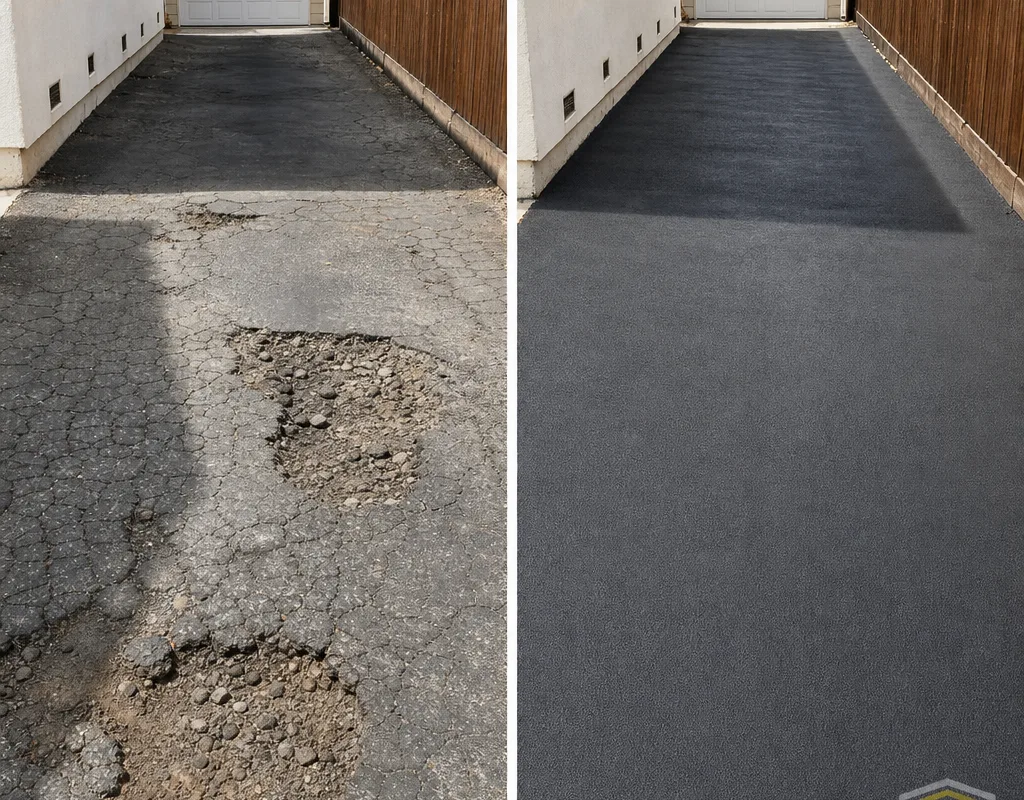
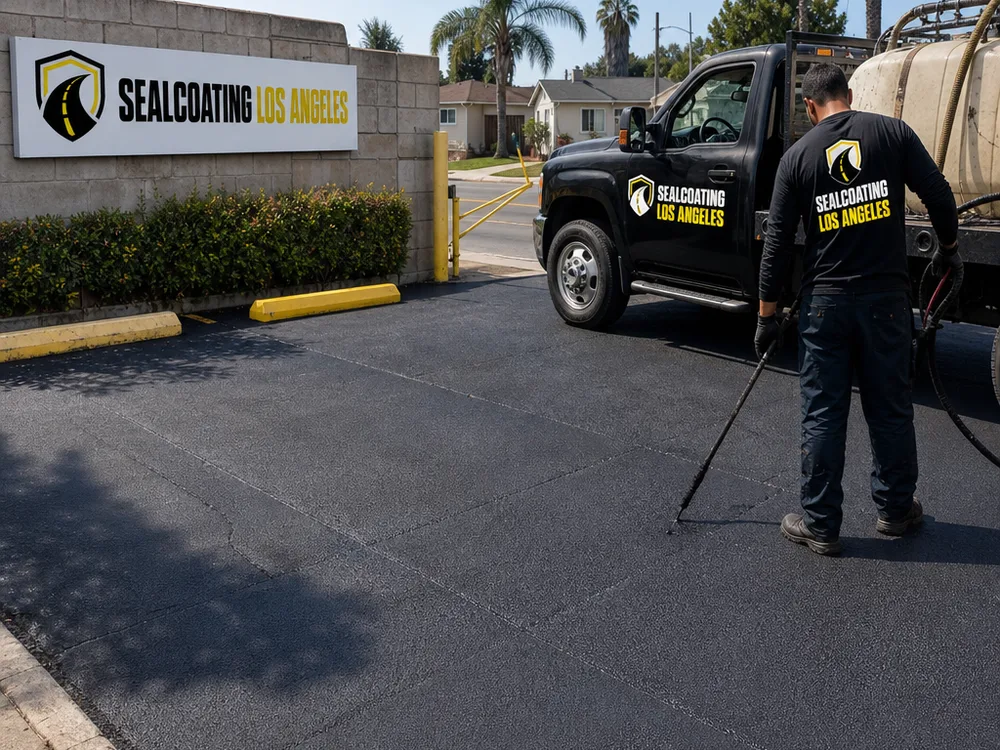
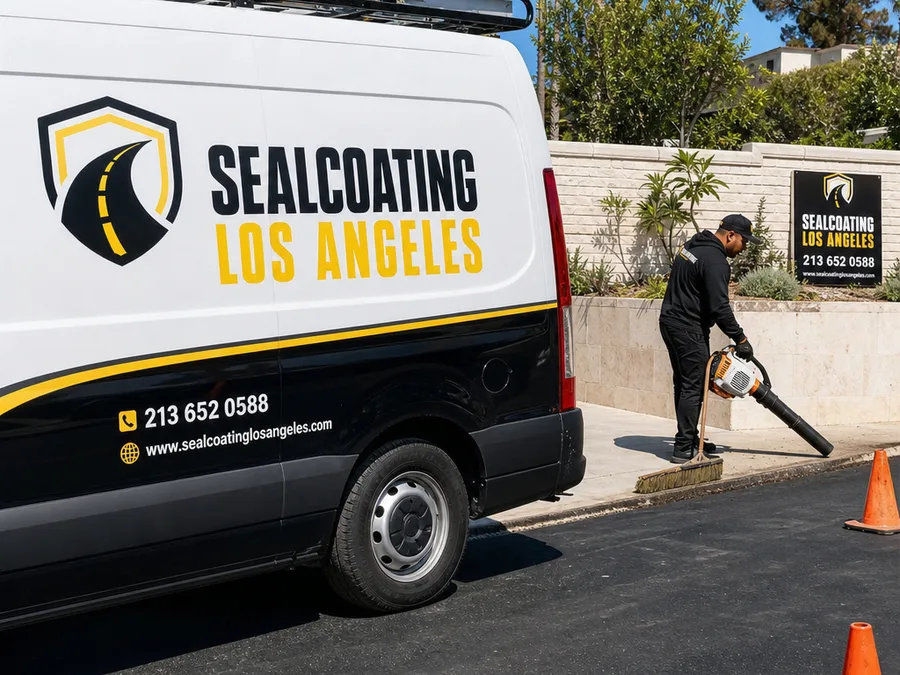
Patching is the right choice when damage is isolated and the surrounding asphalt is still structurally sound; resurfacing makes more sense when the surface is broadly oxidized, cracked, or uneven across most of the driveway. In Los Angeles, we often see a mix: targeted asphalt patching for potholes and soft spots first, then a maintenance step later once the surface is stable.
A properly built pothole repair can last for years when the failed asphalt is removed, the base is stable, and the patch is compacted to the right thickness. If the base stays wet or the edges are not sealed and tied in, the pothole often returns at the same spot because water and tire shear keep working the seam.
Yes, but alligator cracking usually requires remove-and-replace patching rather than crack filling because it indicates structural failure under the surface. We typically cut out the cracked section, rebuild the base if needed, and install a new compacted patch so the repaired area can support vehicle loads.
Most hot-mix asphalt patches can handle light vehicle traffic the same day once they cool and set, but tight turning, kickstands, and heavy loads should wait longer. We give site-specific guidance based on temperature, patch thickness, and whether the driveway has steep slopes or tight turning areas that can scuff fresh blacktop.
Yes. Pavement maintenance Los Angeles property owners request often includes crack repair, spot patching, and a plan to address drainage and wear points before they turn into larger failures. The same repair standards apply whether it is a single-family driveway or a shared drive aisle.
Move vehicles off the driveway, clear planters or portable items near the repair area, and point out any irrigation leaks or drainage issues you have noticed. On many Los Angeles properties, sprinklers or hose runoff near the slab edge is a repeat source of soft spots, so it helps to identify those areas early.
Tell us what you are seeing—cracks, potholes, sinking, or edge failure—and we will confirm the condition on site, explain the best repair options, and provide a written scope for your Los Angeles property.